
Skin Conditions: Sun Damage, Age Spots & Brown Spots
Home » Sun Damage, Age Spots & Brown Spots
Understanding Sun Damage and Hyperpigmentation
Have you noticed brown spots, uneven skin tone, redness or white spots appearing on your face? Changes in skin pigmentation are common and can develop gradually from years of sun exposure, hormonal changes, inflammation and the natural aging process.
At Kitsilano Medical Aesthetics in Vancouver, we understand that every person’s skin is different. The most appropriate treatment depends on the type of pigmentation, your skin tone, your skin’s sensitivity and your individual goals.
Our approach focuses on assessing your skin, identifying the likely cause of discoloration and determining which treatments may help improve your complexion safely and effectively.
The goal is healthier-looking, more even-toned skin with a treatment plan tailored to your individual needs.

What Are Sun Spots, Age Spots and Brown Spots?
Although these terms are often used interchangeably, different types of skin discoloration can have different causes and may require different treatments.
1. Sun Spots
Sun spots, also known as solar lentigines, are flat brown or tan marks that develop after repeated exposure to ultraviolet (UV) radiation. They commonly appear on the face, cheeks, forehead, hands, chest and shoulders.
What causes sun spots?
- Cumulative exposure to UVA and UVB rays.
- Inadequate daily sun protection.
- Repeated sunburns and tanning.
- Natural changes in melanin production over time.
Sun spots can become more noticeable as sun exposure accumulates over the years. Certain cosmetic treatments may help reduce their appearance following an appropriate skin assessment.
2. Age Spots
Age spots, sometimes called liver spots, are areas of increased pigmentation associated with cumulative sun exposure and aging. Despite their name, they are not caused simply by getting older.
They typically appear as flat, well-defined brown or dark tan patches on sun-exposed skin.
How can age spots be treated?
Depending on the diagnosis and skin type, treatment options may include selected light-based treatments, laser procedures or topical skincare products designed to improve uneven pigmentation.
A medical assessment by Dr. Kamani is important before treating any new or changing spot because some skin conditions can resemble age spots.
3. Brown Spots and Hyperpigmentation
Hyperpigmentation occurs when areas of skin produce or retain excess melanin, the pigment responsible for skin colour.
Brown spots can develop because of:
- Sun exposure.
- Post-inflammatory hyperpigmentation following acne, irritation or injury.
- Hormonal changes, including those associated with melasma.
- Certain medications or inflammatory skin conditions.
Treatment depends on the underlying cause. Some superficial pigmentation may respond well to light-based treatments, while melasma and deeper pigmentation may require a more gradual approach using topical products, sun protection and carefully selected procedures.
Important: Hyperpigmentation can often be managed, but it may recur. There is no single permanent cure for every type of hyperpigmentation.
What About White Spots and Redness from Sun Damage?
Sun damage does not always appear as brown spots. Changes in skin colour can include lighter patches, redness and visible blood vessels.
White Spots
White spots may develop when areas of skin lose pigment or produce less melanin. Possible causes include sun-related changes such as idiopathic guttate hypomelanosis, vitiligo, certain infections or other skin conditions.
These spots are not necessarily the same as ordinary sun spots. Because their causes differ, treatment must be selected according to the diagnosis. IPL and pigmentation lasers are not appropriate for every white spot and may worsen certain conditions.
Redness and Broken Capillaries
Long-term sun exposure can contribute to a red or uneven complexion, visible blood vessels and other signs of photoaging. Persistent redness can also be associated with rosacea or other inflammatory skin conditions.
Depending on the cause, treatment may involve vascular-targeting light or laser technology, skincare or management of the underlying condition.
A proper assessment helps determine whether redness is related to sun damage or another skin concern.


Can Sun Damage Cause Precancerous Changes or Skin Cancer?
Sun exposure can damage the DNA inside skin cells. Over time, accumulated damage may contribute to precancerous growths and skin cancer.
One example is actinic keratosis, a rough, scaly patch that can sometimes progress to squamous cell carcinoma. Other skin cancers, including basal cell carcinoma and melanoma, may also appear as new or changing spots.
Watch for spots that:
- Grow or change in shape, colour or texture.
- Have irregular borders or multiple colours.
- Bleed, itch, become painful or develop a persistent crust.
- Form a sore that does not heal.
These warning signs can occur in every skin tone. If a spot is new, changing or suspicious, seek medical assessment before cosmetic treatment. A cosmetic laser or IPL procedure should never be used as a substitute for diagnosing a potentially cancerous lesion.
Why Skin Tone Matters When Treating Pigmentation
Not all skin responds to treatment in the same way. Skin tone, sensitivity, pigment depth and the underlying condition can all affect the choice of treatment and the likelihood of side effects.
At Kitsilano Medical Aesthetics, we recognize and understand the diversity of skin types, tones and ethnic backgrounds. From very fair skin to medium, olive, brown and deeper skin tones, every patient requires an individualized approach to pigmentation treatment. Factors such as melanin levels, sensitivity, sun exposure history and the risk of post-inflammatory hyperpigmentation must be considered before recommending IPL or laser procedures.

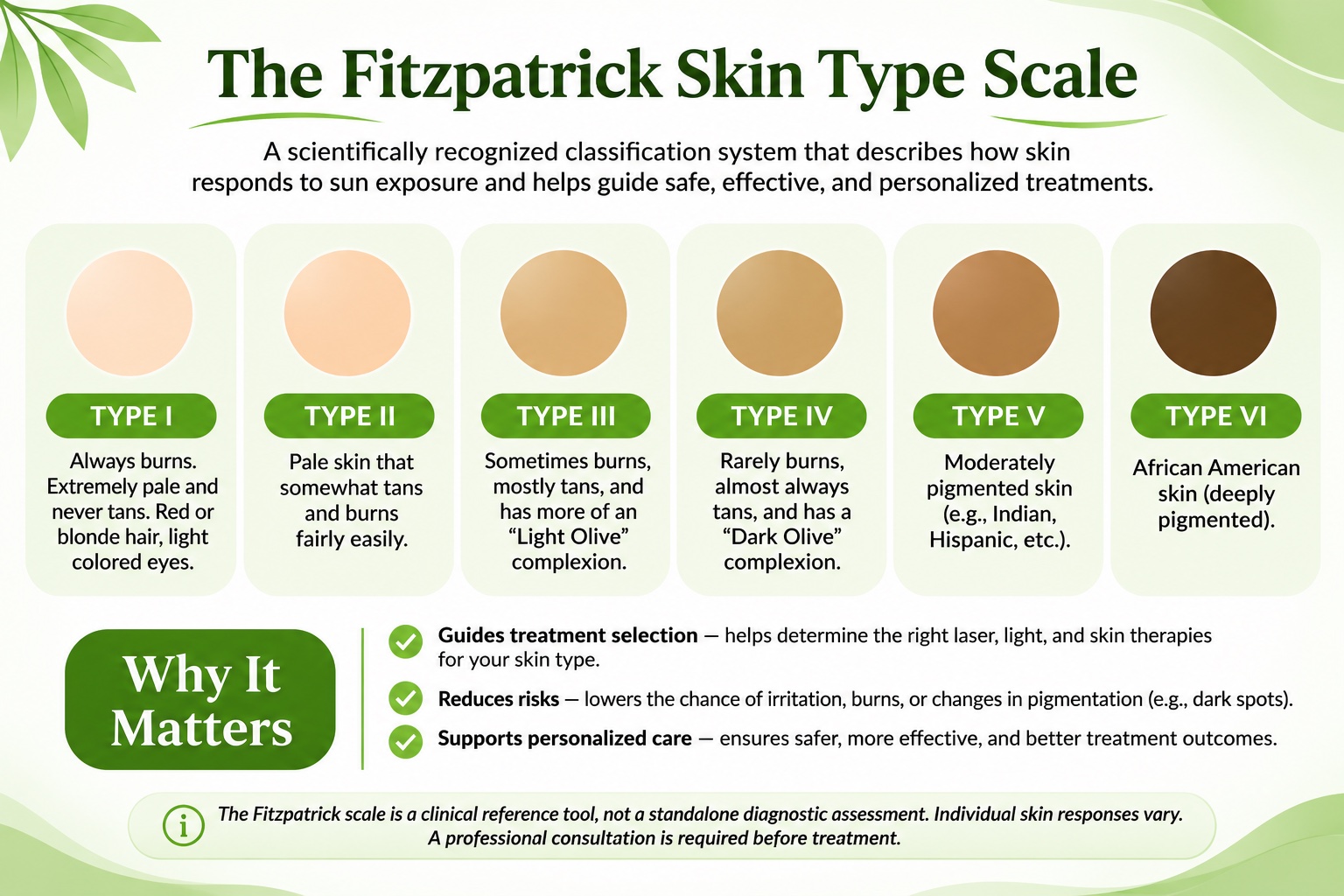
Understanding the Fitzpatrick Skin Phototype Scale (Types I–VI)
One tool used in dermatology to help assess skin characteristics is the Fitzpatrick Skin Phototype Scale. This classification system identifies six skin phototypes (I–VI) based primarily on how an individual’s skin responds to ultraviolet (UV) exposure, including their tendency to burn and ability to tan.
The 6 Fitzpatrick skin types are generally described as:
- Type I: Very fair skin that typically burns easily and never tans.
- Type II: Fair skin that usually burns easily and tans minimally.
- Type III: Light to medium skin that may experience mild burns and gradually develops a tan.
- Type IV: Olive or light brown skin that burns less frequently and tans more easily.
- Type V: Brown skin that rarely burns and tans deeply.
- Type VI: Deep brown or dark skin that typically does not burn easily and tans deeply.
Understanding a patient’s Fitzpatrick skin phototype can help inform treatment planning, particularly when considering IPL and laser procedures. Patients with higher phototypes (IV–VI) may have a greater risk of unwanted pigmentation changes following certain light-based treatments, making appropriate technology selection, treatment settings and professional assessment especially important.
It is important to recognize that the Fitzpatrick scale is a guide to UV sensitivity, not a complete measure of skin colour or ethnicity. People within the same phototype can have different skin characteristics and treatment responses. A comprehensive assessment of each patient’s individual skin is therefore essential.

Treating Asian Skin and Other Medium-to-Darker Skin Tones
Asian skin encompasses a wide range of tones and skin characteristics. Some patients, particularly those with more melanin, may be more susceptible to post-inflammatory hyperpigmentation after irritation, burns or aggressive cosmetic procedures.
For suitable patients, a conservative treatment plan may include:
- Prepare the skin first. Establish a gentle skincare routine, support the skin barrier and consider appropriate pigment-targeting topical products under professional guidance.
- Reassess the skin. Confirm the likely diagnosis, assess skin sensitivity and evaluate whether light-based treatment is suitable.
- Select the appropriate technology. Depending on the condition, a clinician may recommend a carefully selected laser or another treatment with settings appropriate for the patient’s skin.
- Use gradual treatment when appropriate. The objective is to improve discoloration while minimizing inflammation and the risk of new pigmentation.
- Maintain results with sun protection. Daily sunscreen and suitable skincare help reduce the risk of pigmentation returning.
Not every patient with Asian skin needs the same preparation or laser. In some cases, topical treatment alone may be preferable, and IPL may not be the safest choice. Our medical team will assess every patient and provide the most appropriate skin treatment tailored to their individual skin type, concerns and goals.
Treating Fair Skin
Patients with lighter skin may be suitable candidates for certain IPL or pigment-targeting laser treatments for confirmed superficial sun spots. The choice depends on the diagnosis, skin sensitivity and other risk factors.
Treating Darker Skin
For patients with deeper skin tones, careful device selection and conservative settings are particularly important. Some laser and light treatments can trigger unwanted darkening or lightening of the skin.
A personalized assessment helps determine whether light-based treatment, topical skincare or another approach is more appropriate.
IPL and Laser Treatments for Sun Spots
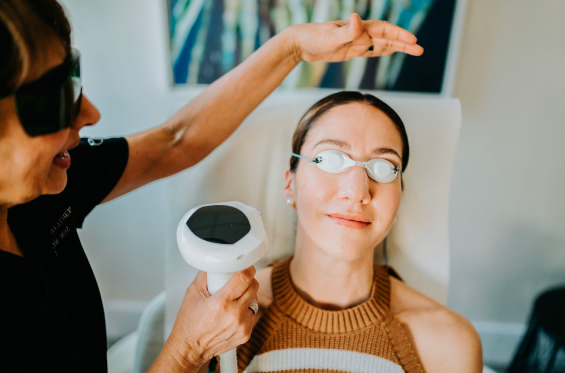
Intense Pulsed Light (IPL) uses pulses of broad-spectrum light to target selected skin concerns, including certain types of superficial pigmentation and visible redness.
For suitable candidates, IPL may help:
- Reduce the appearance of some sun spots and age spots.
- Improve uneven skin tone.
- Reduce certain forms of sun-related redness.
- Create a more even-looking complexion.
Laser treatments use specific wavelengths of light and may be appropriate for selected pigmentation concerns that require a different treatment approach.
IPL is not a laser, and neither IPL nor laser therapy is suitable for every pigmentation condition. Results, the number of sessions and recovery time vary by individual.
A consultation is necessary to determine which treatment, if any, is appropriate for your skin.

Daily Skincare and Sun Protection
Professional skin treatments work best when supported by a consistent home skincare routine.
Use Broad-Spectrum SPF Every Day
Apply a broad-spectrum sunscreen of SPF 30 or higher every day. Reapply at least every two hours when outdoors and after swimming or sweating, following the product instructions.
Sun protection helps reduce further sun damage and lowers the risk of existing pigmentation becoming darker.
Consider SkinCeuticals Skincare
SkinCeuticals offers skincare products that may complement a personalized pigmentation-management plan. Depending on your skin’s needs, a professional may recommend appropriate antioxidant products, pigment-targeting ingredients, moisturizers and sunscreen.
The right products depend on your skin type, sensitivity and the cause of your pigmentation. Introduce active ingredients carefully, particularly before or after a procedure, and follow your provider’s instructions.
Remember: Sunscreen and ongoing skincare are essential parts of managing pigmentation, even after successful treatment.
Is Hyperpigmentation Curable?
There is no universal cure for all forms of hyperpigmentation. However, many forms can improve with appropriate treatment.
Some superficial sun spots may respond well to targeted procedures. Post-inflammatory pigmentation may fade over time when the underlying cause is controlled. Melasma and other recurrent pigmentation conditions often require ongoing management.
New spots can develop even after existing ones have improved. Consistent sun protection, suitable skincare and individualized follow-up can help maintain results.
Every Skin Type Needs an Individual Assessment
There is no one-size-fits-all solution for sun damage or pigmentation.
Before recommending a treatment, the provider should consider:
- The type and depth of pigmentation.
- Your natural skin tone and sensitivity.
- Your Fitzpatrick skin phototype (I–VI), including your history of burning and tanning after sun exposure.
- The diversity of your skin characteristics, including melanin levels, undertones and individual responses to previous treatments.
- Your medical and skincare history.
- Previous reactions to lasers, IPL or topical products.
- The risk of post-inflammatory hyperpigmentation.
- Your expectations, lifestyle and willingness to follow aftercare instructions.
The safest and most appropriate treatment plan is one based on your individual skin rather than the appearance of a spot alone.

What Our Clients Say About Sun Damage, Age Spot & Brown Spot Treatments
Sun Damage, Age Spots & Brown Spots Treatment FAQs
Sun spots and age spots often refer to the same type of pigmentation, known as solar lentigines. They develop primarily because of cumulative UV exposure and commonly appear on the face, hands and other sun-exposed areas.
IPL can improve certain types of superficial brown spots in appropriately selected patients. Results vary, and IPL may be unsuitable for melasma, some darker skin tones or unidentified skin lesions. An assessment is necessary before treatment.
Some laser treatments can be used on Asian skin, but the safest approach depends on the individual’s skin tone, diagnosis, device and settings. Conservative treatment and appropriate skin preparation may help reduce the risk of post-inflammatory hyperpigmentation.
Some white spots are associated with sun-related changes, while others have different causes. Treatment depends on the diagnosis, and some conditions require dermatological assessment rather than cosmetic light-based treatment.
Yes. Cumulative UV exposure can contribute to precancerous skin growths and skin cancer. New, changing, bleeding or non-healing spots should be assessed medically before any cosmetic procedure.
They can. Even when existing spots improve, ongoing sun exposure and other triggers can cause new pigmentation to develop. Daily sunscreen and an appropriate maintenance routine are important.
The number of sessions depends on the condition, treatment method, pigment depth and individual response. Your provider can discuss a realistic treatment plan after assessing your skin.
A suitable routine may include daily broad-spectrum sunscreen and carefully selected products that address pigmentation while minimizing irritation. Products should be chosen according to your skin type and the underlying cause of discoloration.
The Fitzpatrick Skin Phototype Scale is a classification system that categorizes skin into six types (I–VI), based on how skin responds to UV exposure, including its tendency to burn and tan. It helps clinicians consider skin sensitivity when evaluating treatment options. Understanding a patient’s skin phototype can help guide the selection of appropriate laser or IPL treatments and reduce the risk of unwanted pigmentation changes. However, individual skin characteristics and a professional assessment are equally important when determining the safest treatment approach.
Newsletter
Sign up for exclusive offers on treatments and products, VIP events, and fun tips for your Health & Beauty.
Book a Skin Pigmentation Treatment Consultation in Vancouver
Concerned about brown spots, age spots, sun damage or uneven skin tone?
Vancouver Kitsilano Medical Aesthetics clinic offers personalized consultations to help determine which treatment options may be appropriate for your skin.
Your consultation is an opportunity to discuss your concerns, understand the available options and develop a treatment and skincare plan tailored to your individual needs.
Contact Kitsilano Medical Aesthetics to arrange your consultation.
Individual results vary. Cosmetic treatments carry risks and are not appropriate for every patient. Suspicious skin lesions require medical assessment before cosmetic treatment.
